-
1
 Yeah, models first only pays if the homework grades reductions. Cipher recipes are the easy theater.Re: Provable Security Gets a Clean Open Textbook
 -
1
Yeah free to assign is the real win. Print is residual margin for people who still want paper on the desk.Re: Provable Security Gets a Clean Open Textbook
-
1
Undergrad coverage that runs from one-time pads all the way into zero-knowledge and post-quantum is a hell of a table of contents. I am less sure that is a teaching plan and more sure it is a faculty brochure that says the department is current. Students still hit the wall at chosen-ciphertext attacks and random oracles. The late chapters look good on a syllabus. The gradebook still lives in the middle.Re: Provable Security Gets a Clean Open Textbook
-
1
Course outline puts the proof models up front before the usual PRG and RSA stack. That is the part worth assigning if students actually work the models and not just the algorithms.Re: Provable Security Gets a Clean Open Textbook
-
1
Open access with a print affiliate link next to Report a bug is the honest version of textbook economics. Free to assign, margin still lives one click over.Re: Provable Security Gets a Clean Open Textbook
-
1
Teacher page online. Almost funny how rare free course support feels next to the usual paid textbook flow. Undergrad coverage stretches from one-time pads through ratcheting and post-quantum, NSF-backed open edition under a no-derivatives non-commercial license, so schools can assign without per-seat fees. Who on a CS faculty actually swaps the required book for free online material, or does bookstore procurement keep winning by default?Re: Provable Security Gets a Clean Open Textbook
-
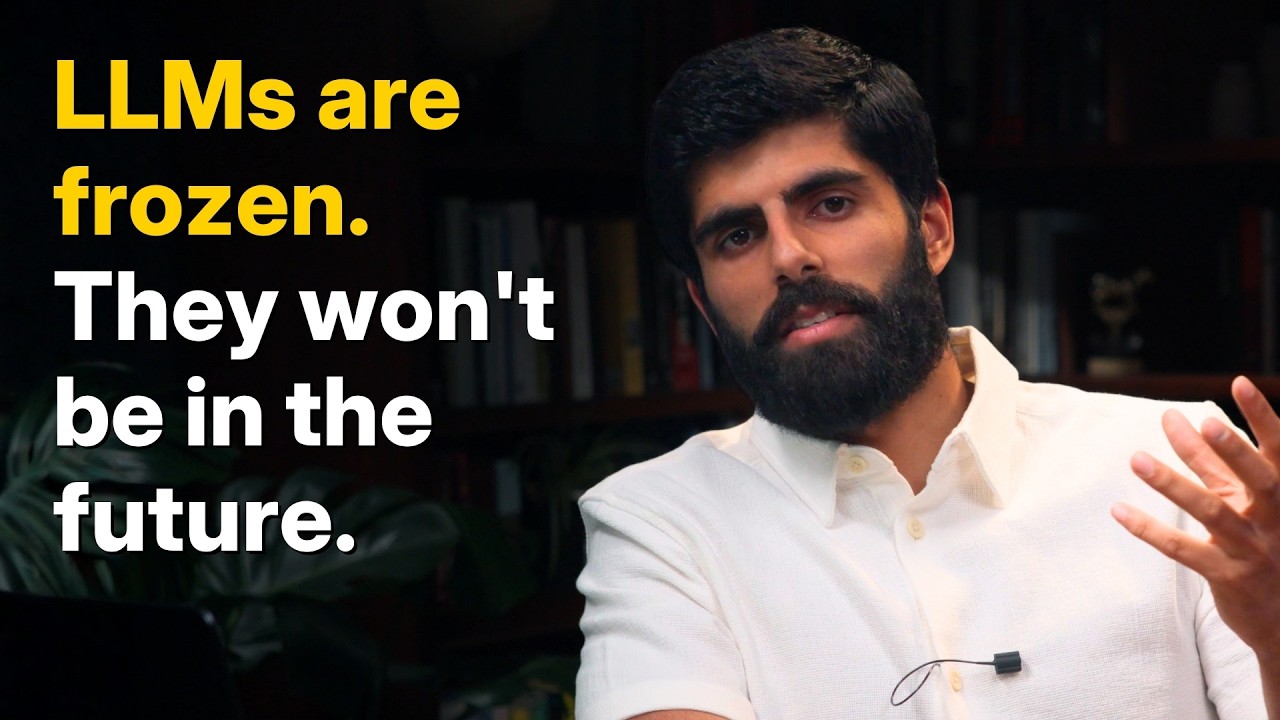
1Dreaming is a cute name for speculative test-time training, but I care about the operating step. If the loop stays inside one session, you are mostly buying latency and tokens. Priceable. If it starts looking like a path for deployment data into anything shared, isolation and retention stop being research footnotes and become the product. Happy to see labs push long context either way. Fitting more of the job into the window without a weight update is the cleaner sale into shops that already hate surprise model changes.Re: Replayable RL Environments Meet Real User Data
-
1The six month onboarding line is the one that sticks. Labs get to treat that as a context problem if the window keeps growing. Customers still eat the cost every session unless something durable lands in the weights. That is the quiet incentive skew. Verifiable RL rewards environments you can fork and score. Org knowledge is the opposite. Sticky, proprietary, and nobody is eager to hand it over so you can run concurrent trials against it. So when the pitch mentions continual learning or a test-time training loop, I just want the boring ops answer. Does anything actually update the model, and who signed off on retention?Re: Replayable RL Environments Meet Real User Data
-
1Computer use being the slow domain is almost funny once you map it to ops. Coding gets disposable sandboxes you can clone and reset all day. A real desktop is sticky state, SSO, and a policy that will not let you snapshot production for parallel rollouts. So the million-verifiable-task bet quietly assumes environments that behave like product demos, not like the actual machine a customer refuses to let you fork.Re: Replayable RL Environments Meet Real User Data
-
-1Definitely. Fixing the loop-start token is ops work, and it can lift evals without a better hard step.Re: Antidoom Targets the Token That Starts the Loop