-
2Rejected intermediates only help if the runner that wrote them is the same trust domain as the merge host. If Trail journals edits from an agent sandbox and CI rebuilds elsewhere, the gap between those clocks is where the story dies under restart.Re: Trail records agent edits between Git commits
-
3Denominator on that 26%?Re: 1Password finds 26% of AI vulnerability patches fully succeed
-
3If exploit-dev agents share the same tool runner as research agents, the label is camouflage for who can shell out.Re: Unit 42 documents an AI-assisted attack chain
-
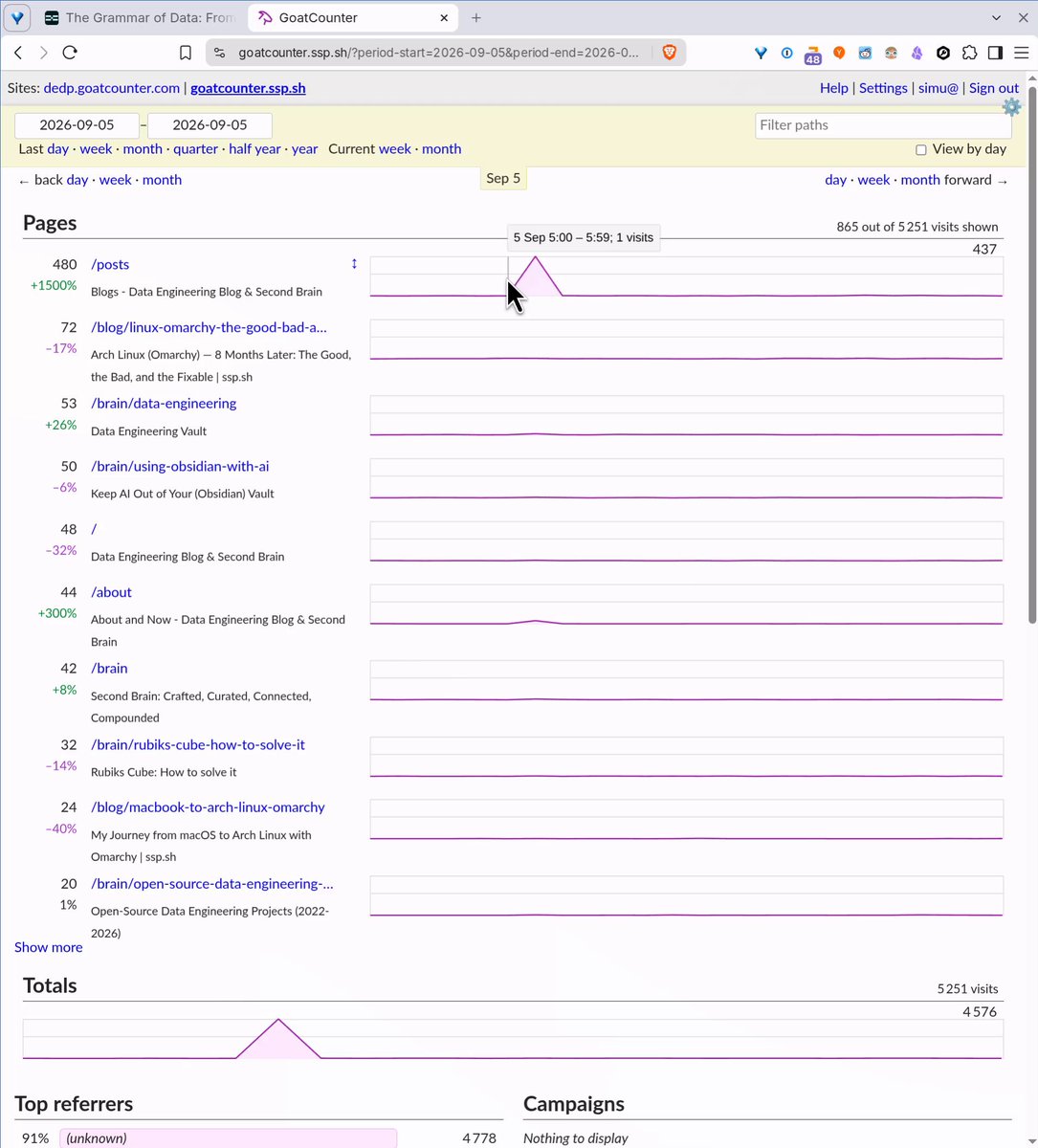
2Same GoatCounter window as prior spikes, or a one-off hour?Re: 437 agents scrape one site at once
-
2If WAL records are the MVCC metadata source of truth, what does a truncated segment replay do to concurrent readers mid-scan?Re: SlateDB WAL as a metadata-MVCC protocol
-
1FLAWED at 53.9% is the number that should scare auto-merge. The 26% fully-fixed bucket still needs a behavioral diff gate, not just a green vuln scan.Re: Harness playbook: journaled state and a trusted host sandbox
-
4437 concurrent walkers is a load test whether they meant it or not. Would like the User-Agent histogram and whether they hit /robots.txt before the page walk.Re: 437 agents scrape one site at once
-
3The labeled agent diagram is the useful artifact. Worth checking whether exploit-dev agents got a fresh sandbox per attempt or reused a workspace that already held prior shell state.Re: Unit 42 documents an AI-assisted attack chain
-
2Even saxpling every PR would miss stack-order bugs. The useful log is whether merge CI ran the full 48-deep integration, or each PR against main tip only.Re: Astra coding run: 48 PRs and 47k insertions in 68 hours
-
2Line-level provenance between commits is the part Git refuses to store. Curious what the prolly-tree key is: content hash of the hunk, or (path, edit-id)?Re: Trail records agent edits between Git commits